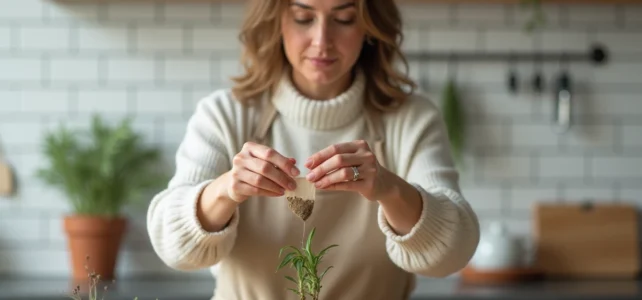
Every day, millions of used tea bags end up in the trash without distinction. The act may seem trivial, but the issue of recycling these bags becomes complicated once you take a closer look at their composition. Not all bags are created equal, and reusing them without prior sorting can contaminate compost or a vegetable garden. Before looking for tips to give them a second life, you first need to know what you’re dealing with.
Tea Bags and Microplastics: What the Wrapper Really Contains
The starting point for smart recycling is the composition of the bag. A significant portion of the bags sold in supermarkets contains polypropylene, a heat-sealed plastic that ensures the seal’s integrity. Pyramid bags made of nylon or PET pose the same problem. These bags release microplastics when in contact with hot water, making them unsuitable for home composting and direct contact with garden soil.
See also : How to Optimize Your Business Performance with Custom IT Solutions
Pure cellulose or unbleached paper bags, on the other hand, decompose without residue. Some brands indicate this on the packaging, while others do not. In 2024, the Canadian government explicitly recommended prioritizing loose tea with a reusable filter or certified plastic-free bags.
In Europe, the directive on single-use plastics is pushing manufacturers to reformulate their packaging, including tea bags. Local sorting systems do not always accept used bags in the green waste bin.
Further reading : How to Simplify Your Real Estate Processes with Online Real Estate
Before any reuse, check for the label “100% cellulose” or “plastic-free” on your tea box. For more detailed sorting guidelines tailored to each type of bag, the Jardiniers info website to explore outlines the sorting systems by material.
Used Tea Bags in the Garden: Natural Fertilizer or a Misguided Idea
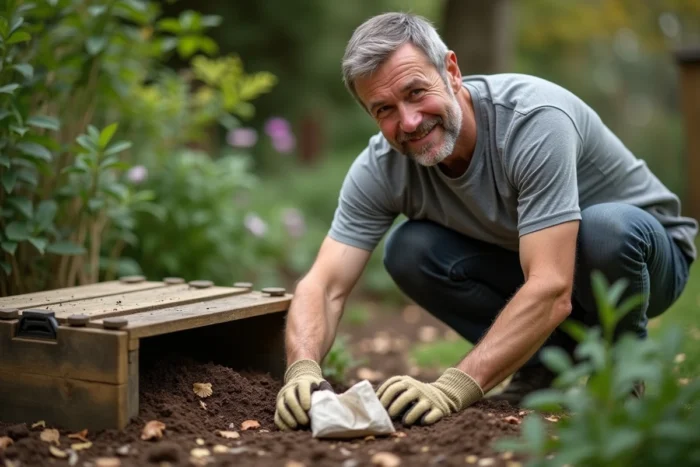
The most common use is to throw tea bags into the compost or directly at the base of plants. For a pure cellulose bag, this is relevant. Infused tea leaves enrich the soil with nitrogen and promote microbial activity in the soil. They decompose within a few weeks in a well-aerated composter.
The problem arises with bags containing plastic fibers. Even partially synthetic, they do not decompose entirely. Fragments remain in the compost, and then in the soil of the vegetable garden. For garden use, the rule is simple: open the bag, retrieve the leaves, and dispose of the wrapper separately if you have any doubt about its composition.
Which Plants Benefit Most from Tea Grounds
Acid-loving plants get the most benefit from tea residues. Hydrangeas, azaleas, ferns, and blueberries appreciate a light mulch of damp leaves mixed with soil. Used green tea slightly acidifies the substrate, which is suitable for these species without requiring chemical amendments.
For indoor plants, the addition should remain moderate. An excess of moist organic matter in a poorly drained pot promotes mold. Two to three tablespoons of squeezed leaves per month is sufficient for a standard-sized pot.
Reusing Tea Bags for Household Maintenance
Beyond the garden, used bags have absorbent and slightly astringent properties that make them useful in several household situations.
- Absorbing odors in a refrigerator or trash can: a dried bag placed on a saucer captures odors for several days thanks to the residual tannins.
- Degreasing stubborn dishes: the tannins in black tea partially dissolve cooked fats. A used bag soaked in warm water, rubbed on a dish, makes cleaning easier before using a sponge.
- Cleaning varnished wood surfaces: a squeezed black tea bag rubbed on furniture revives the color without chemicals. The tannin nourishes the varnish and reduces superficial micro-scratches.
These uses only work with black or green tea, not with fruity or flavored infusions whose additives can stain or leave sugary residues.
Zero Waste and Tea: The Reusable Bag Changes the Game
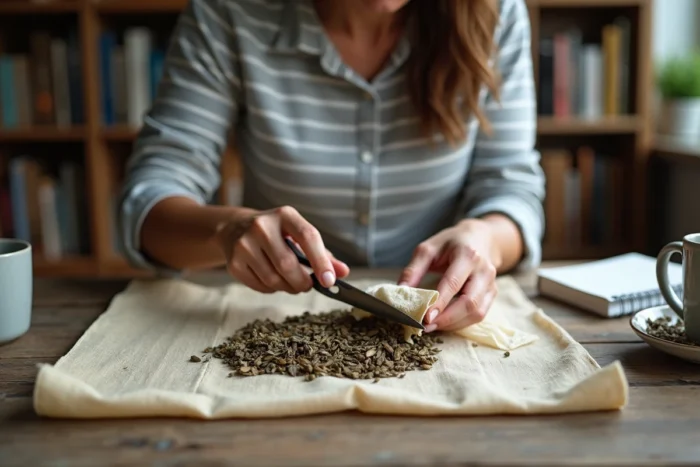
Recycling used bags remains a stopgap solution. Switching to loose tea with a reusable filter eliminates the problem at the source. Stainless steel, food-grade silicone, or organic cotton filters can be washed and last for several years. The initial cost is offset in a few months, as loose tea is often cheaper per gram than bagged tea.
For those who prefer the bag format, there are unbleached cellulose empty bags available. You fill them yourself, and they can be composted without sorting. It’s a compromise that retains the convenience of a bag without generating plastic waste.
What About So-Called Compostable Bags
Some manufacturers label their bags as “compostable” if made from PLA (polylactic acid, derived from corn). Field reports on this point vary. PLA decomposes under industrial conditions (high temperature, controlled humidity), rarely in a garden composter. A “compostable” bag is not necessarily so at your home. Check if the label specifies “home composting” or “industrial composting,” two very different realities.
The selective sorting of tea bags remains a blind spot in municipal guidelines. Communities rarely classify this waste explicitly. While waiting for harmonization, the most reliable precaution is to extract the leaves and treat the wrapper as ordinary packaging waste when its composition is uncertain.
Smart recycling of used tea bags does not depend on the number of accumulated tips, but on a basic reflex: identifying what the bag contains before deciding what to do with it. A pure cellulose bag opens up real possibilities, from composting to household cleaning. A bag containing plastic, even labeled “natural,” significantly limits the options.