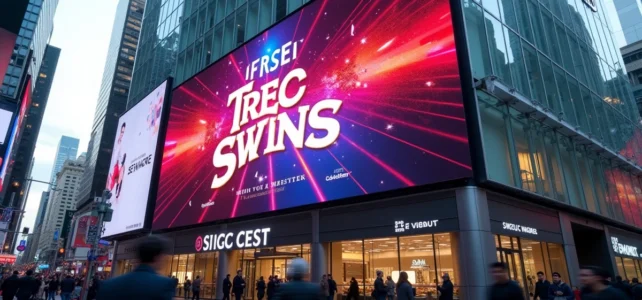
A giant LED screen is an assembly of modules made up of light-emitting diodes, capable of displaying high-brightness visual content that is readable both in daylight and indoors. This technology is gradually replacing printed media in the visual communication of businesses, communities, and event organizers. Understanding its technical operation allows for informed choices before any investment.
Pitch, brightness, resolution: the technical parameters that determine the output
The pitch refers to the distance in millimeters between the center of two adjacent diodes. The lower this value, the higher the pixel density per square meter, and the sharper the image remains at close range. A screen intended for a store window, where passersby are a few meters away, requires a much finer pitch than an advertising panel visible from a road.
Related reading : How to Simplify Your Real Estate Processes with Online Real Estate
Brightness, measured in candelas per square meter (cd/m²), determines readability based on the environment. An outdoor screen requires significantly higher brightness than an LED wall placed in an exhibition hall. Some models incorporate sensors that automatically adjust the light intensity based on ambient light, which reduces electricity consumption in the evening or during overcast weather.
The final resolution depends on the ratio between the pitch and the total surface area of the screen. A large LED wall with a wide pitch can display striking images seen from afar but may appear pixelated up close. That’s why the choice of pitch is made based on the minimum viewing distance, not just the desired size.
See also : The Secrets to Optimal RCR Pro Van Rysel Setup to Boost Your Performance
Before sizing a project, it is essential to know the exact location and distance of the viewers. Consulting the InnovoTech website for screen sales allows for comparing available configurations based on these criteria.
Regulations for outdoor LED displays in France: what has changed since 2023
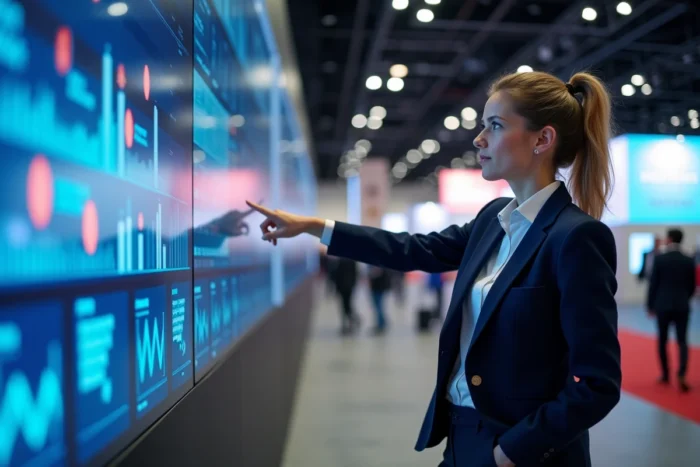
Since 2023, several major French cities, including Paris, Lyon, and Grenoble, have tightened restrictions on outdoor luminous displays. These measures are part of energy sobriety goals and efforts to combat visual pollution. They impose limitations on operating hours, maximum luminance levels, and authorized locations for advertising screens.
These constraints directly impact the profitability of a giant LED screen. A panel that can only operate part of the day generates fewer visual impressions than a device without time restrictions. Advertisers and owners must adapt their broadcasting loops and light intensity to remain compliant.
Incorporating regulatory compliance from the project’s design phase avoids significant additional costs. Three points deserve special attention during the selection phase:
- The screen model must allow for fine-tuning of brightness, ideally with automatic adjustment via a sensor, to meet the thresholds imposed by local advertising regulations.
- The content management system (CMS) must offer precise scheduling, with automatic shutdown or standby according to the time slots defined by the applicable municipal order.
- The physical location must be validated in advance with the town’s urban planning department, as heritage areas or the vicinity of historical monuments often face total prohibitions.
Ignoring these aspects exposes one to fines and a requirement for dismantling. A compliant screen from the installation protects the investment throughout its lifespan.
Dynamic LED displays indoors: how content changes the game
A giant LED screen in a window or inside a retail outlet only produces results if the displayed content is tailored to the context. Displaying a static image on an LED wall is akin to using a more expensive printed panel. The added value lies in the rotation and real-time adaptation of content.
Dynamic display software allows for programming segmented broadcasting loops by time slot. A downtown business can display lunchtime promotions between 11 AM and 2 PM, then switch to brand communication in the afternoon. This flexibility transforms the screen into a living communication medium, whereas a paper poster remains unchanged for weeks.
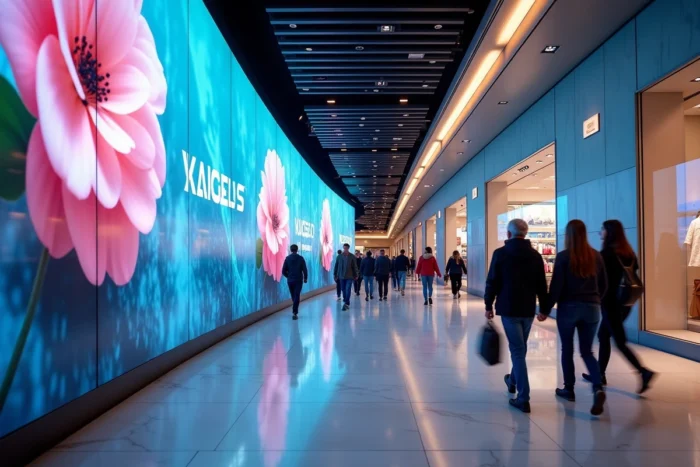
The format of the content is as important as its rotation frequency. Short videos (a few seconds) with strong contrasts and text readable from a distance capture more attention than a succession of static visuals. The file sizes and their resolution must correspond to the screen’s pitch to avoid a blurry output or noticeable loading times.
Remotely controlled content and instant updates
The majority of current CMS solutions operate via a cloud interface. The operator can modify content from any connected workstation, without physical intervention on the screen. For a brand with multiple equipped outlets, centralized content management reduces the deployment time of a campaign to just a few minutes.
This architecture also allows for the integration of external data feeds: weather, sports results, product availability in stock. The displayed content becomes contextual, enhancing its relevance for the audience present at any given moment.
LED screens for sports events and fan zones: a rapidly growing use
Since 2024, giant LED screens have become the standard solution for fan zones and outdoor sports broadcasts. Organizers favor this technology for its high brightness, which ensures readability even in bright sunlight, and for its modularity, which allows for assembling display surfaces suited to the audience size.
The rental of LED screens for events represents a rapidly expanding segment. Providers offer packages that include installation, wiring, technical management, and dismantling. This rental model avoids the initial investment for one-off events while providing a professional visual output.
Festivals, concerts, and sports competitions also use these screens to display sponsored content between highlights. The screen then becomes a monetizable advertising space, allowing organizers to cover part of the rental cost by selling broadcast spaces to partner advertisers.
The giant LED screen is no longer reserved for large brands or stadiums. Its modular format, combined with accessible content management tools and regulations that must be mastered in advance, makes it a medium for visual communication applicable to a wide variety of contexts, from local businesses to large-scale events.