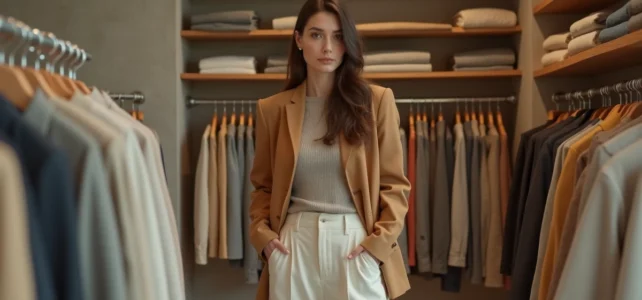
The autumn-winter 2026-2027 season reshapes fashion codes under the combined effect of new regulations, strategic acquisitions in luxury, and sharp aesthetic choices on the couture runways. What concrete signals distinguish this cycle from previous ones, and what wardrobe choices result from it for the coming months?
Anti-fast fashion law and Charvet acquisition: two shocks that redistribute the cards
Two structural events are altering the French fashion landscape well beyond the catwalks. The first is regulatory: the anti-fast fashion law, definitively adopted by Parliament, comes into effect on September 1, 2026, and imposes a financial penalty on garments deemed non-durable.
You may also like : The Latest Trends and Essential Tips in the World of Computing
According to FashionNetwork, the draft government decree foresees progressive penalties that could reach up to 19.50 euros for an ultra-ephemeral jacket. Fast fashion brands like Shein will see their offerings become more expensive in the French market, which should mechanically shift some purchases towards more sustainable pieces.
The second signal comes from luxury. Chanel has acquired Charvet, a historic Parisian shirtmaker founded 188 years ago, an absolute reference for bespoke men’s shirts. This acquisition is interpreted as a desire for expansion of the men’s wardrobe at Chanel and a revaluation of traditional craftsmanship. To follow these underlying movements over the weeks, Mode For You’s news regularly compiles significant events in the sector.
Further reading : The latest trends and must-know news in the real estate market in 2024
| Event | Nature | Impact on the wardrobe |
|---|---|---|
| Anti-fast fashion law (Sept. 2026) | Regulatory | Increase in the cost of ephemeral pieces, shift towards sustainable purchases |
| Acquisition of Charvet by Chanel | Industrial / luxury | Upgrade of men’s shirts, signal of craftsmanship |
| Autumn-winter 2026-2027 couture week | Creative / runways | Sculptural volumes, heavy textures, muted palette |

Couture trends autumn-winter 2026-2027: what the runways establish
The Paris haute couture week delivered clear directions. Balenciaga, under the direction of Pierpaolo Piccioli, presented a collection centered on the modernity of Cristobal’s heritage, featuring architectural silhouettes and pronounced shoulders. Dior modernized the flower woman in a style described as singular, arty, and virtuosic by the specialized press.
Elie Saab confirmed his anchorage in the fairy tale couture realm, while Schiaparelli and the young label Désiré Doué brought more experimental proposals. These shows outline three dominant stylistic axes for the upcoming season:
- Sculptural volumes inherited from couture, with structured shoulders and defined waists, already infusing ready-to-wear
- A return to heavy textures (velvet, felted wool, thick satin) at the expense of fine and airy materials from spring
- A muted color palette, dominated by burgundies, forest greens, and deep blacks, breaking away from the pastels of the previous season
In contrast, sequins and sheerness, omnipresent in the spring-summer collections, are clearly receding. The message from designers converges towards a more constructed and less ephemeral fashion, which resonates with the regulatory framework described above.
Key pieces to watch for the back-to-school season
The structured long dress, worn by several houses during couture week, is set to be the standout piece of autumn. Jeans, meanwhile, are not disappearing but changing cut: straight and slightly flared silhouettes are replacing skinny cuts.
On the accessories side, satin ballet flats, spotted at several brands and on personalities like Anya Taylor-Joy, are positioning themselves as a sustainable alternative to sneakers for a more polished back-to-school look.
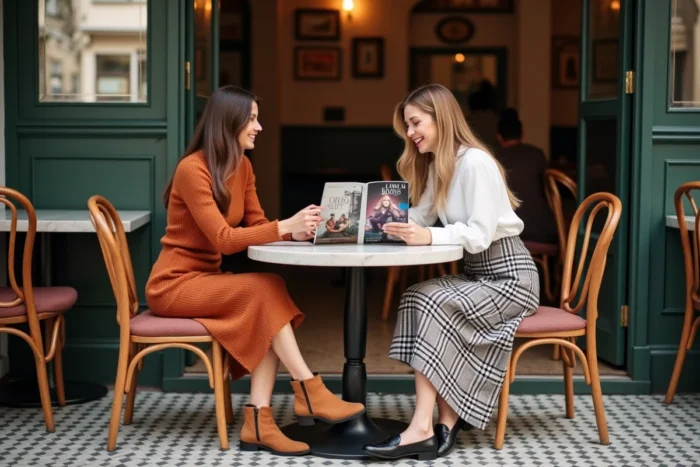
Sustainability and style: fashion 2026 facing environmental penalties
The anti-fast fashion law is not limited to penalizing low prices. It establishes a new criterion for consumer choice: the durability of a piece becomes a style argument, not just an ecological consciousness. Brands positioned in the mid-range segment (Christine Laure, French labels of accessible ready-to-wear) are already communicating about the longevity of their collections.
FashionNetwork notes a fundamental trend for 2026: fashion is focusing on texture and strong pieces rather than rapid wardrobe turnover. This orientation is concretely reflected in purchases:
- Prioritizing a thick wool coat worn for three winters rather than two synthetic jackets replaced each season
- Investing in classic cuts (trench, structured blazer) that transcend trend cycles
- Choosing natural or recycled materials whose labeling will become clearer with the new regulation
The progressive penalty per item creates a visible price gap between durable clothing and disposable pieces. Fast fashion brands will either have to absorb the extra cost or pass it on. In either case, the price advantage that underpinned their model is diminishing.
Haute couture and ready-to-wear: how the runways influence everyday looks
The couture collections of Balenciaga and Dior are not disconnected showcase objects. The structured shoulders seen on the runways are already appearing in the blazers of pre-autumn collections available in stores. The modernization of the flower woman at Dior translates into floral prints on rigid cuts, far from the fluid spring dresses.
Katie Holmes, photographed in New York with three different bags in a few days, illustrates another shift: the bag is becoming a look marker on par with shoes. Structured models (stiff leather, geometric shapes) are taking precedence over soft and informal bags.
The Alaïa Foundation has also contributed to this season by unearthing new masterpieces from the Tunisian couturier, reminding us that couture craftsmanship remains the laboratory of everyday fashion. The fitted cuts and stretch materials associated with Alaïa continue to influence contemporary wardrobes.
This season is distinguished by the convergence between legislative framework and creative direction. The law pushes towards sustainability, the runways offer pieces built to last, and strategic acquisitions like that of Charvet signal that luxury is betting on long-term know-how. The next test will be the September back-to-school season when the penalty will officially come into effect and labels will display the true cost of an ephemeral garment.