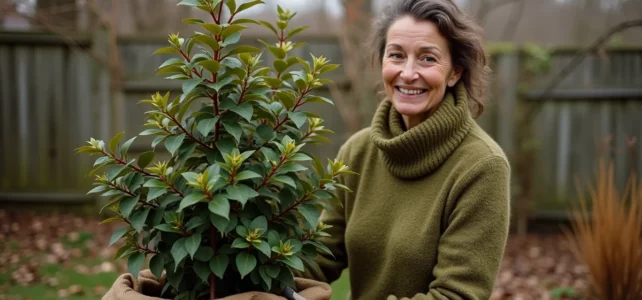
A bougainvillea planted against a south-facing wall in Morbihan can survive several winters without damage, only to lose all its branches in a single episode of late frost in March. The problem is not the average cold of the season, but the unexpected nighttime peak. To protect bougainvilleas from frost, one must think in terms of critical thresholds rather than seasonal averages, and adapt the method to the type of cultivation (pot or in the ground).
Damage threshold at 4 °C: anticipate before visible frost
Most guides recommend taking action when temperatures drop below zero. In practice, a potted bougainvillea starts to suffer well before that. As soon as nights consistently drop below 4 °C, the roots confined in the substrate lose their ability to absorb water and the leaves fall, even without frost on the ground.
Further reading : Tips and Tricks for a Fulfilling Family Life Every Day
This threshold of 4 °C changes the intervention window. In cold regions (Loire Valley, inland Brittany, Alsace), this often means bringing the pot inside by mid-October, not late November. A detailed protocol for this early protection is described on the Envies de Jardin website, with a calendar adapted to French hardiness zones.
For a bougainvillea in the ground, the logic is the same but the options differ. The shrub cannot be moved. Therefore, protection must be installed before the first nights below 4 °C, not the night before a frost alert.
Recommended read : Chemical sealing for wood and natural stone: essential tips and compatibilities
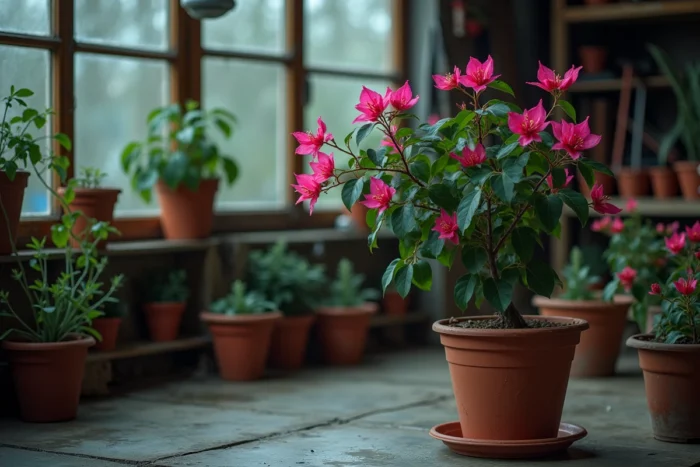
Wintering in a pot: cool rest versus warm maintenance
Two strategies oppose each other, and the choice has a direct impact on the flowering of the following year.
The cool and bright rest
The pot is placed in an unheated but frost-free location (unheated veranda, glazed garage, cold greenhouse). The ideal temperature is between 8 and 12 °C. Natural light remains abundant. Watering is reduced to the strict minimum, just enough to prevent the substrate from completely drying out.
Under these conditions, the bougainvillea loses some or all of its leaves. This is normal. This forced rest triggers a earlier and more abundant flowering in spring, because the plant has accumulated the energy necessary for flower bud formation instead of spending it on vegetative growth.
Keeping in a heated room
The alternative is to keep the bougainvillea in a living space, between 18 and 22 °C. The plant retains its leaves and continues to grow, but winter light remains insufficient. The result: long, thin stems without bracts. In spring, flowering is late and sparse.
Too warm wintering produces vegetation, not flowers. If there is no cool space available, it is better to place the pot in the least heated room of the house, near a south-facing window.
Watering and fertilization management during winter
Two classic mistakes recur every year:
- Watering out of habit while the plant is at rest. In a cool location, light watering every two to three weeks is sufficient. The substrate should dry out between waterings.
- Continuing fertilization. Any nutrient supply must be stopped as soon as wintering begins. Fertilizer stimulates growth at a time when the plant needs to slow down.
- Allowing water to stagnate in the saucer. Stagnant moisture in winter causes root rot, the leading cause of loss of potted bougainvilleas.
Bougainvillea in the ground: multilayer protection against frost
In a cold climate, planting a bougainvillea in the ground is a gamble. Some gardeners succeed in zone 8b (Atlantic coast, Pyrenean foothills), but this requires active protection every winter.
Choosing the location
Everything hinges on the planting. A wall exposed to the south or southwest, made of stone or masonry, radiates the heat accumulated during the day. You can easily gain a few degrees compared to a location in the open wind. Positioning the bougainvillea against a heat-retaining wall reduces the nighttime temperature difference.
Areas with drafts, valley bottoms (where cold air stagnates), and north-facing exposures should be avoided.
Setting up the wintering cover
The wintering cover remains the most common solution, but its effectiveness depends on how it is installed:
- Double or triple the thickness of the cover. A single layer of standard cover only protects against two to three degrees. Against severe frost, layers must be overlapped.
- Do not press the cover directly against the branches. Creating an air space between the cover and the branches, using stakes or a wooden frame, improves insulation.
- Also protect the base. A thick mulch (dead leaves, straw, bark) of fifteen to twenty centimeters insulates the shallow roots, often the first to be affected.
- Remove the cover on mild days to avoid condensation and fungal diseases. Winter protection is not a permanent wrapping.
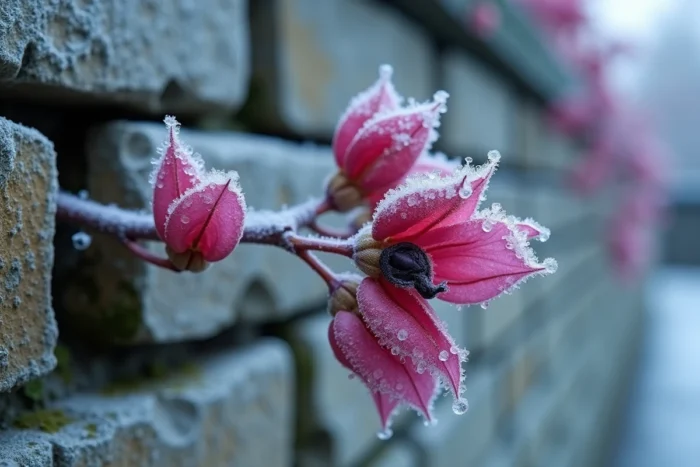
Pruning and emerging from wintering: the calendar that preserves flowering
The bougainvillea is pruned in spring, not in autumn. Pruning before winter creates open wounds that weaken the plant against the cold. One should only remove dead or broken branches before bringing it indoors.
In spring, once the last frosts have passed (not before mid-April in cold regions, sometimes May at altitude), the branches are shortened by about a third. The colored bracts form on the wood of the year, so a clean cut stimulates branching and multiplies flowering points.
The transition from pot to outdoor conditions should be gradual. First, expose the bougainvillea to direct light for a few hours a day, then gradually increase the duration over one to two weeks. A sudden move from the garage to a sunlit terrace can cause leaf burns.
Opinions vary on the exact timing for resuming fertilization, but a potassium-rich fertilizer applied two to three weeks after emerging helps restart bract formation without forcing vegetative growth. Bougainvilleas flower better when slightly stressed for water and fed sparingly; a plant that is too pampered produces leaves, not colors.