When preparing for a trail outing in the Prealps or setting up a weightlifting corner in an apartment in Lausanne, the first challenge is not finding equipment, but finding the right purchasing channel. In Switzerland, the range of sports equipment is divided among national brands, niche specialty shops, and online platforms, without a centralized comparator to help navigate through it all. Understanding this fragmentation is already a time-saver and helps avoid poor investments.
Sports Distribution in Switzerland: A Fragmented Market Complicating Purchases
One might expect that such a structured country would offer a linear purchasing path. The reality on the ground is different. The Swiss sports equipment market operates without a dominant aggregator.
Further reading : Discover the latest news and tips for success in entrepreneurship
Large retailers like Manor or Decathlon cover general needs. Specialists like Sharkfitness focus on gym equipment (treadmills, weight machines). Others, like Transa or Hardloop, target outdoor and mountaineering. And alongside these identified players, dozens of local resellers remain invisible online but offer technical advice and after-sales service that platforms do not provide.
For home fitness equipment or club gear, a wide catalog can be found on azsport.ch, which covers both weightlifting and collective training accessories. This type of generalist sports distributor avoids the need to place multiple orders with four different suppliers.
Related reading : The best ideas for going out and meeting new people in Cholet
The direct consequence of this fragmentation: people often spend more time comparing channels than comparing the products themselves.
Fitness and Weightlifting Equipment: What the Field Really Requires
When equipping a gym or personal space, the classic reflex is to start with an overall budget and distribute it. This is a common mistake. It’s better to start from actual practice and size accordingly.
Gym Equipment for Daily Use
A club that opens six days a week has different constraints than an individual who trains three times a week. Professional-grade weight machines (cables, presses, racks) must withstand thousands of cycles without mechanical play. Technogym, present in the Swiss market with a premium range, meets this specification, but at a price that excludes most individual budgets.
For a home gym, the priority goes to the fundamentals:
- A stable squat rack or cage, compatible with Olympic bars, which serves as the backbone for most compound exercises
- A set of adjustable dumbbells or a progressive weight plate kit, sufficient to cover several years of progression without needing to repurchase
- A high-quality adjustable bench, because an unstable bench limits both performance and safety
Cardio and Functional Training
Treadmills, rowing machines, stationary bikes: the range is vast. Feedback varies on this point, but an undersized cardio machine ends up in the garage within a few months. Before purchasing, check the weight of the flywheel on a bike, the running surface on a treadmill, and especially the motor warranty.
Outdoor Equipment in Switzerland: Choosing for the Alpine Terrain
Switzerland imposes constraints that other European markets do not have. Altitude, rapid weather changes, and the technicality of trails require reliable equipment. We’re not talking about comfort but about safety.
Technical Shoes and Clothing
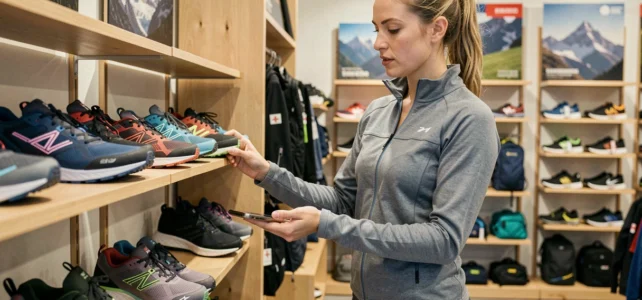
A pair of hiking shoes bought online without trying them on poses a real risk of blisters from the first outing. Trying on in-store remains the best selection filter for shoes and backpacks. Retailers like Transa or local sports shops allow testing with the right pair of socks and the appropriate backpack volume.
For clothing, the three-layer system (breathable, insulating, waterproof) is not a marketing gimmick. In the Swiss mountains, going from heat to rain in an hour is common. Investing in a quality waterproof membrane costs more upfront but avoids the need to repurchase every season.
Emerging Disciplines: Padel, Pickleball, Climbing
The Swiss market is seeing the rise of disciplines that are still underrepresented by major retailers. Padel and pickleball are generating increasing demand for specific rackets and accessories. Climbing, already well-established, is driving demand for harnesses, technical shoes, and certified ropes.
For these niche sports, local specialty shops offer a clear advantage in advice. A seller who practices climbing will know how to guide you to the right shoe based on foot morphology and route type, something no product sheet can replace.
Online or In-Store Purchase: Concrete Criteria to Decide
The question does not arise in the same way depending on the type of product. Here are the situations where each channel has the advantage:
- Standardized accessories (elastic bands, yoga mats, water bottles): online purchasing works very well, quality differences are minimal, and price guides the choice
- Heavy machines (rack, treadmill, bench): check local availability to avoid high shipping costs and to inspect stability before purchase
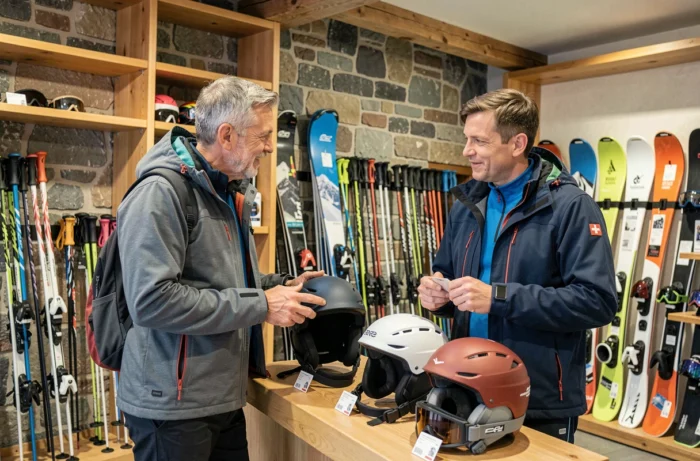
- Shoes, backpacks, helmets: physical fitting remains the only reliable way to avoid a return
- Standardized technical equipment (harnesses, ropes, carabiners): prefer a retailer that guarantees traceability and compliance with current safety standards
Many Swiss distributors now offer click and collect, which combines online research with in-store verification. This is often the most effective compromise.
The Swiss sports equipment market is not lacking in offerings. What is lacking is clarity. Identifying the right channel for your discipline, checking the compatibility of the equipment with your actual use, and not underestimating the value of physical advice: these three reflexes avoid most disappointing purchases.