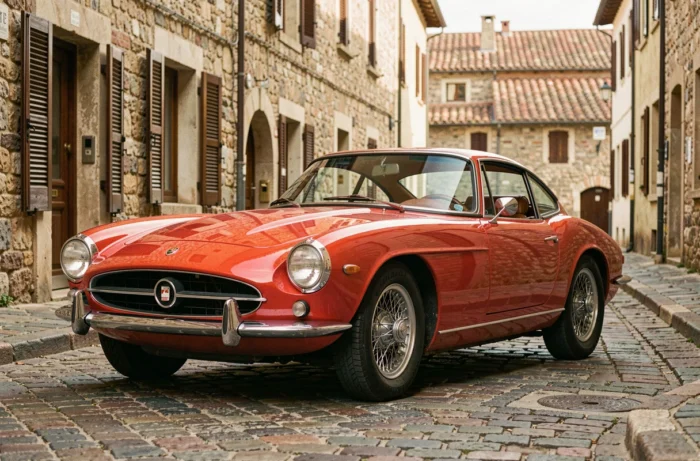
Finding a body part for a French sedan from the 1970s, negotiating a reasonable price on a model without an official rating, or simply understanding if one can still drive in the city center with a classic vehicle registration: the passion for vintage cars is first experienced through these very concrete questions. The classic vehicle market attracts an increasingly diverse range of profiles, and recent regulatory constraints are reshaping the rules of the game for all enthusiasts.
Classic vehicle registration and ZFE: what the regulations really change
It is often heard that a vehicle registered with a classic vehicle registration would be automatically exempt from traffic restrictions. The reality is more nuanced. There is no automatic national exemption for classic cars in low emission zones (ZFE).
Each metropolitan area sets its own rules. As of January 1, 2024, only Paris and Lyon had implemented a truly binding schedule. The majority of the 43 territories affected by the ZFE remain classified as “vigilance territories,” with few or no effective restrictions. Thus, we face a very contrasting geography: the same vehicle may circulate freely in one area and be prohibited in another.
For collectors, this means checking local regulations before each trip. Exceptions exist, but they vary from city to city. Some metropolitan areas grant temporary permits upon request, while others offer daily passes. Feedback on this point varies according to the prefectures, and it is advisable to anticipate administrative procedures several weeks before a gathering or automotive event.
Among the useful resources for keeping up with market news and gatherings, there is lesvoituresanciennes.net, which regularly documents the history and models of vintage vehicles.
Youngtimers and recent sports cars: the car auction market is transforming
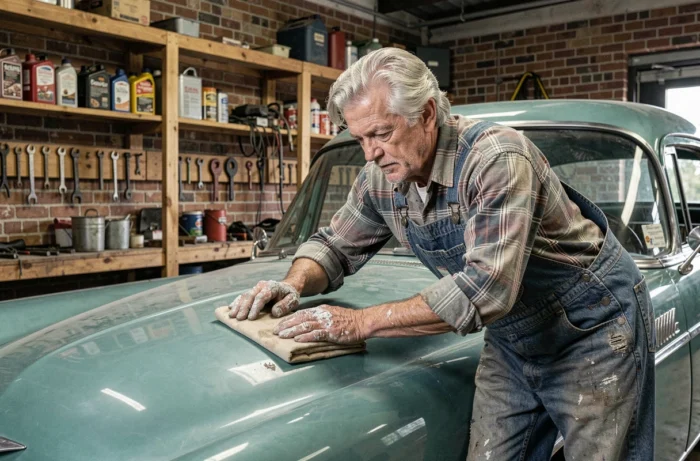
The typical profile of the collector is changing. According to L’Argus, which published a ranking of the main auction houses for used vehicles in August 2026, there is a growing popularity of more contemporary models. Buyers are getting younger, and their interest is shifting more towards youngtimers and sports cars from the 1990s-2000s than solely the icons from the 1950s to 1970s.
This shift has direct consequences on prices. Models once considered “recent used cars” are gradually entering the classic category. A 1990s GTI or a Japanese coupe from the same era can now reach amounts that would have seemed absurd ten years ago.
What drives up or down a value
In the classic vehicle market, the original condition often matters more than a complete restoration. A vehicle preserved in its original state, with its period paint and untouched interior, attracts the most discerning bidders. Conversely, a poorly documented restoration or one carried out with non-compliant parts can significantly decrease the value.
- A complete maintenance history (invoices, service books, work photos) remains the primary trust criterion for an auction buyer.
- Certified mileage, supported by successive technical inspections, weighs heavily in negotiations.
- The rarity of the model (limited edition, specific engine, uncommon catalog color) creates leverage on the final price.
Maintaining a vintage car on a daily basis: the areas to balance
Owning a classic vehicle is not just about parking it in a heated garage. Ongoing maintenance represents the real recurring budget, far more than the initial purchase price. Between spare parts, specific insurance, and suitable storage, one quickly reaches amounts that surprise newcomers.
Spare parts: the nerve of the war
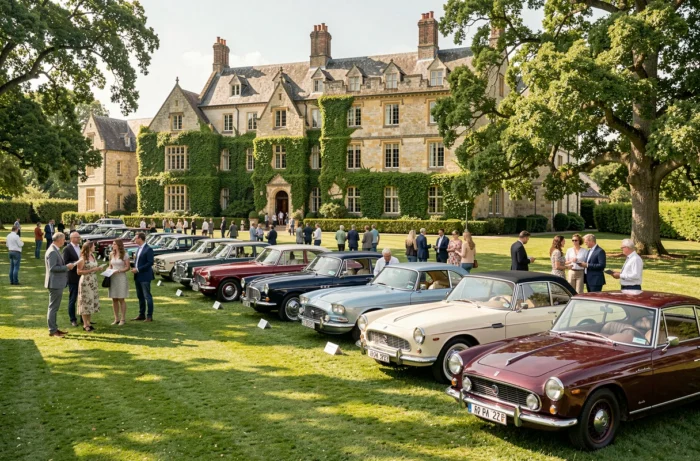
For popular French models (Citroën DS, Peugeot 504, Renault 4L), the network of specialized suppliers remains dense. Mechanical and body parts can still be found at reasonable prices, thanks to networks of enthusiasts and small manufacturers.
The situation becomes more complicated for more obscure models or foreign cars that are not widely distributed in France. In this case, one must rely on swap meets, brand clubs, and sometimes direct imports from the country of origin. Every missing part can immobilize a vehicle for months.
Insurance and classic vehicle technical inspection
Classic vehicle insurance contracts work differently from standard contracts. Most impose a limited annual mileage and require that the vehicle is not used as the primary means of transport. In return, the rates remain significantly lower than those of standard comprehensive insurance.
The technical inspection for classic vehicles follows a simplified protocol compared to regular vehicles. The checked points focus on safety (braking, steering, lighting) without requiring compliance with current anti-pollution standards.
Gatherings and car events: where to meet other enthusiasts
Automotive events are the glue of the community. From local exhibitions organized during Heritage Days to large national gatherings, there are plenty of opportunities to take out your vintage car.
- Regional gatherings, often organized by brand clubs, allow for comparing restorations, exchanging mechanic addresses, and finding rare parts.
- Automotive swap meets remain the best place to find period accessories that are unavailable online.
- Automobile museums (like the one in Mulhouse, a reference in Europe) regularly offer themed events open to owners of vintage vehicles.
These meetings among friends and enthusiasts create lasting bonds. You will encounter both seasoned collectors and first-time buyers seeking advice before their first purchase.
The classic car market remains a universe where patience and technical knowledge make the difference. Whether looking for a heritage investment or simply the pleasure of driving a car with a unique history, it is the quality of the preparation that separates a good deal from a bad surprise.